Single-ply membranes
TPO and other single-ply materials require their own compatible repairs. A TPO seam repair depends on identifying the membrane and preparing a sound joining surface.
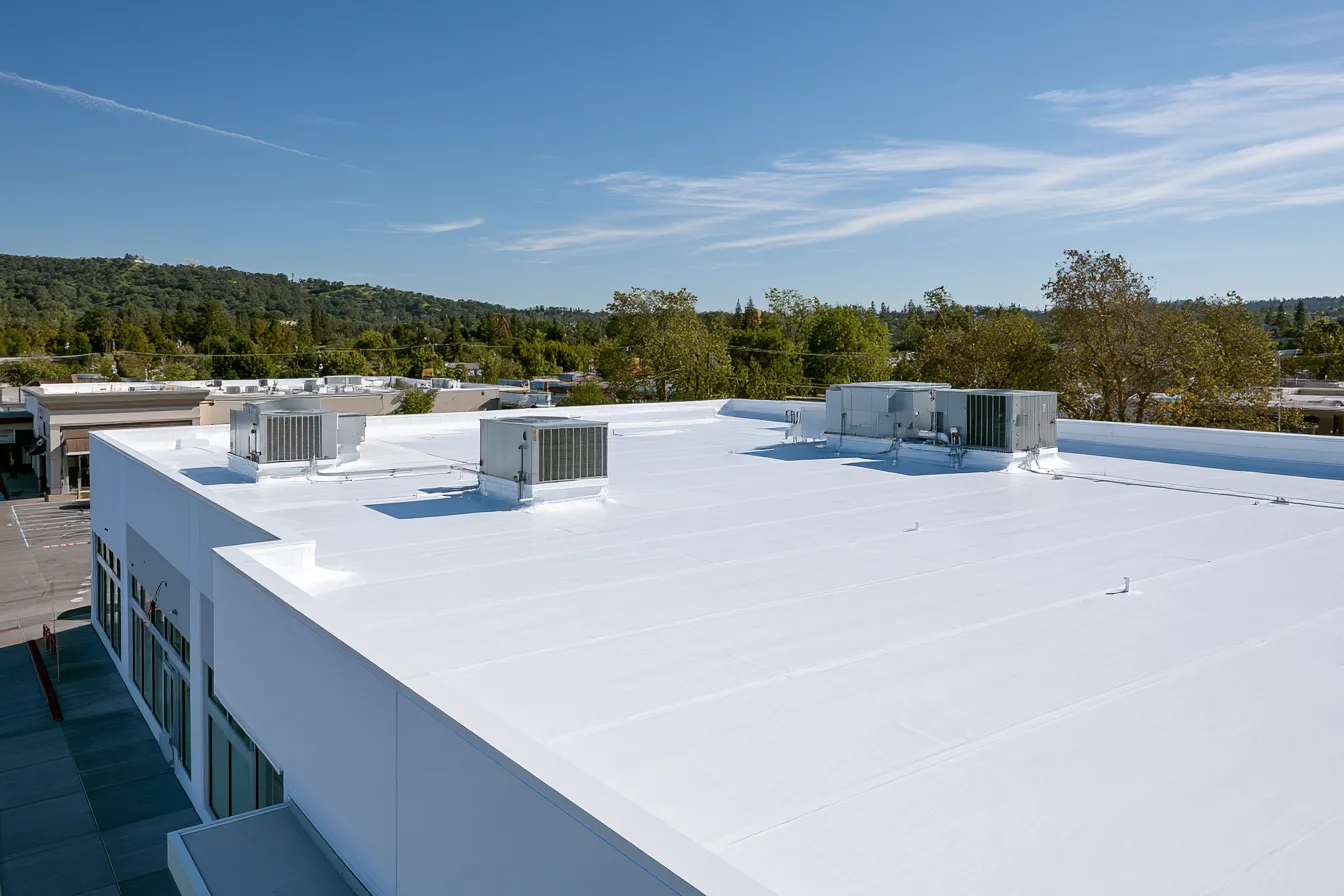
Trace low-slope roof leaks through the membrane, details and drainage. Choose a repair that connects to the existing roof and accounts for wet material below.
A low-slope roof directs water toward drains, scuppers or an edge rather than shedding it quickly down a steep pitch. The route can pass seams, equipment curbs and previous repairs before water leaves the roof. A leak inside may begin some distance from the room affected.
The useful starting point is a picture of that route. What membrane is present? Where does water remain? Which details sit upstream of the leak? Answering those questions helps avoid repeatedly patching the nearest visible seam while the real opening remains elsewhere.
Tell us about the indoor location and whether the leak follows particular weather. Roof access, tenant activity and any equipment in the affected area also help frame the inspection.
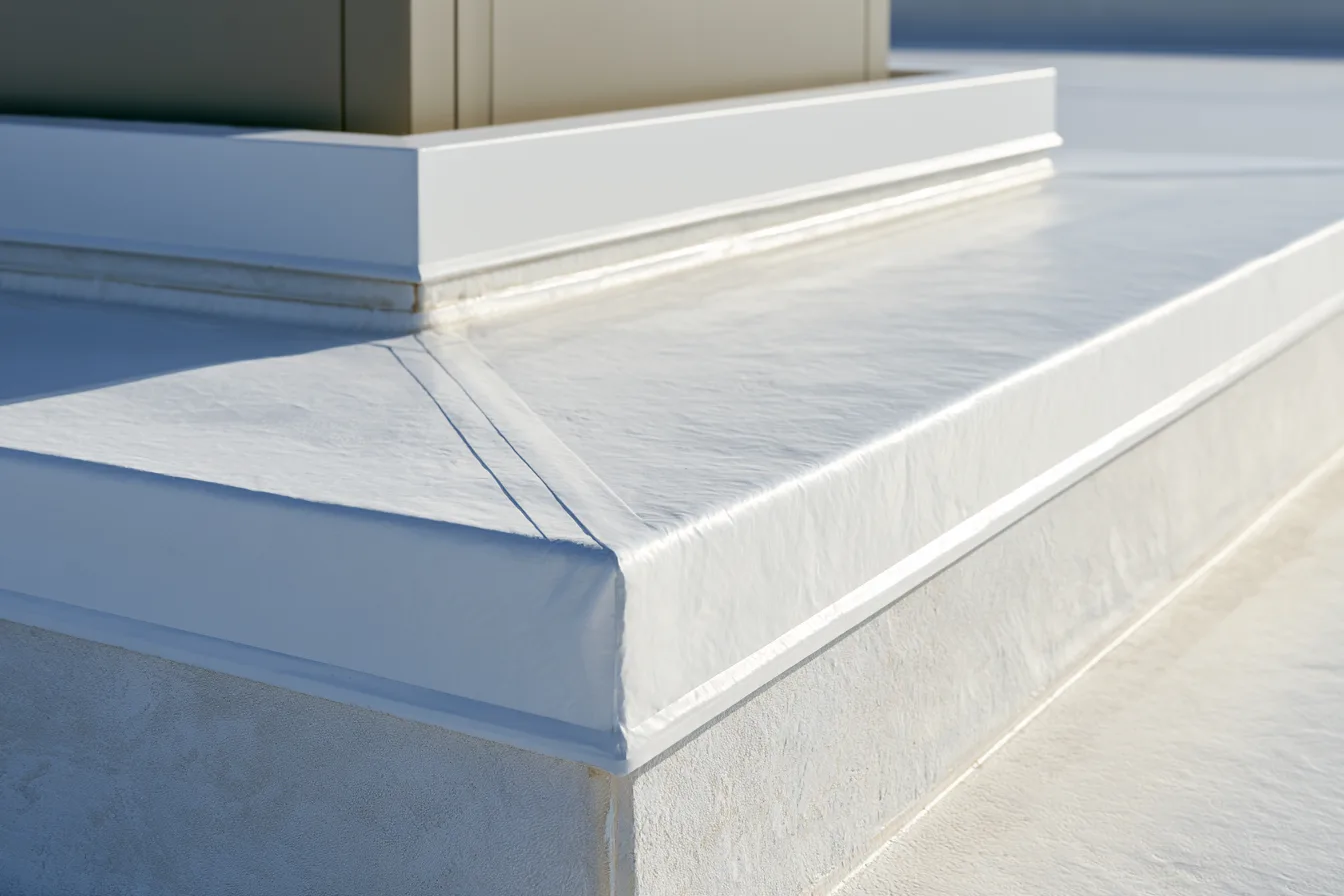
An equipment curb interrupts the roof surface. Its corners, upstands and top connection all need to work with the field membrane. Water that gets behind the vertical flashing can travel beneath otherwise intact roofing.
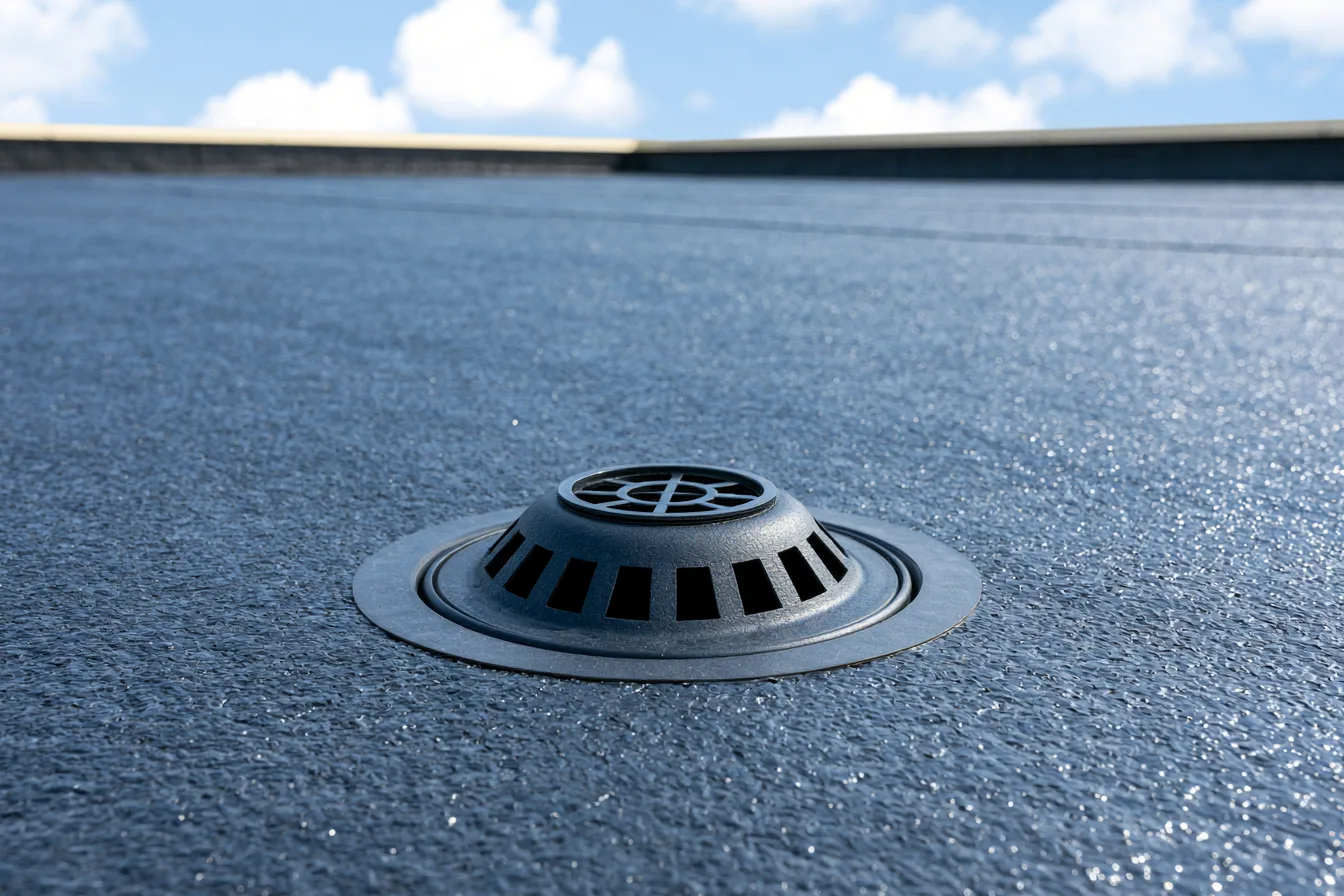
Drain strainers and outlets need a separate look. Clearing debris may restore the outlet, but it does not repair a failed drain connection or change a low area elsewhere. Long-standing water needs its cause understood before another repair is expected to solve it.
A product that sticks today is not necessarily compatible with the existing roof over time.
TPO and other single-ply materials require their own compatible repairs. A TPO seam repair depends on identifying the membrane and preparing a sound joining surface.
A granulated cap sheet or built-up roof has different layers and repair materials. The new work must connect to the existing system without trapping unsuitable wet material beneath it.
The coating and original substrate both matter. Local adhesion failure or incompatible patch material may need removal before a new repair can hold. A coating label does not establish the roof underneath.
The footprint of the visible opening and the footprint of affected material are not always the same.
A small puncture or failed detail may allow a localized repair when the surrounding roof and underlying layers remain sound. Protect the completed area from repeated equipment or foot-traffic damage.
Wet insulation may extend beyond the entry point. Investigation and removal boundaries should follow the actual findings so a surface patch does not leave the damaged assembly enclosed.
The issue may be drainage, movement or several failed details rather than one opening. A broader repair scope can be useful without assuming the entire roof must be replaced.
When repair areas become extensive or the retained roof is no longer suitable, compare restoration and replacement through the complete assembly. Include the operational constraints and the work that each option leaves for later.
Tell us where water is entering and what is happening in the building below. A free roof inspection helps connect the leak to a workable repair scope.