Covering and attachment
Missing, creased or deteriorated shingles, disturbed courses and exposed fasteners can leave openings. On a membrane roof, seams and surface damage become part of that examination.

A free roof inspection gives your roofing question a closer look. A roofer walks the roof and checks the covering and the details that keep water out.
From the driveway, a roof can look like one continuous surface. Up close, it is a set of overlapping materials around edges, valleys, vents and walls. A small defect at one connection can matter more than a larger-looking mark elsewhere.
You can request an inspection because something changed, because a leak has appeared or because you are considering a larger project. The starting question helps focus the visit, while the roof's overall condition gives that finding context.
There is no need to climb up beforehand. Describe the concern and where you noticed it. Interior observations and the approximate time of a leak can help connect the roof finding to the problem.

A useful assessment looks at both the visible material and the paths water can take through its details.
Missing, creased or deteriorated shingles, disturbed courses and exposed fasteners can leave openings. On a membrane roof, seams and surface damage become part of that examination.
Pipe boots, wall joints, chimney connections and roof edges have to shed water onto the covering below them. Surface sealant does not explain whether those layers are intact.
Debris, gutter overflow, low-slope drains and staining beneath an edge can point to where water collects or leaves the intended route. A visible symptom still needs to be traced before choosing work.
The question is whether wind or hail changed the roof, and where. The storm damage page explains why a nearby weather report is context rather than proof of damage.
The roofer considers whether the covering is broadly worn or whether a limited repair remains useful. Material condition, connections and the ability to join new work matter alongside age.
The membrane type, drainage, rooftop equipment and signs indoors need to be considered together. Commercial access and occupied areas should be identified when arranging the inspection.
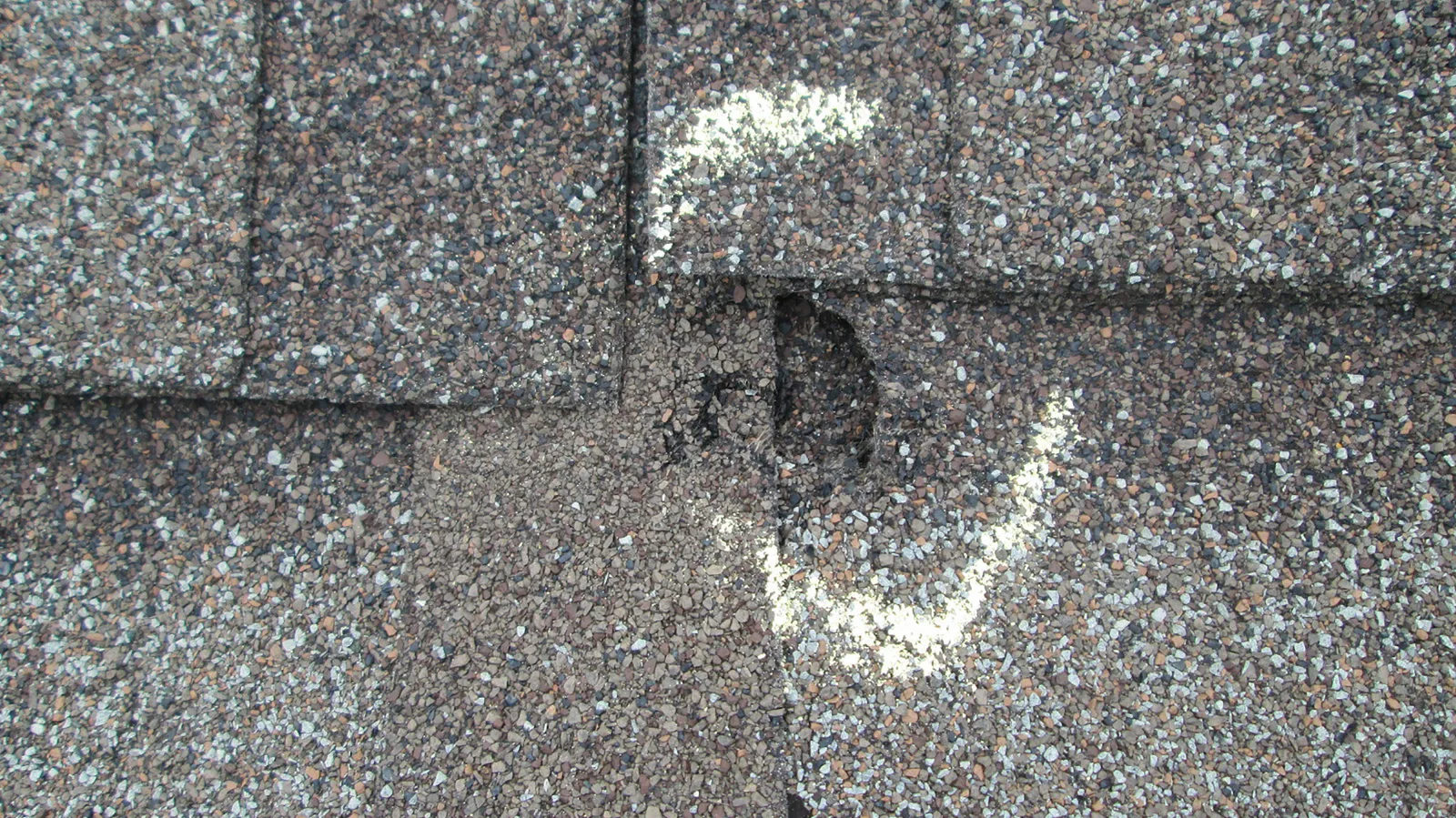
A chalked circle or a loose granule does not, by itself, determine the repair. The important question is what happened to the roofing material and whether its ability to keep water out has been affected.
An inspection also has limits. Concealed decking, insulation or a joint behind another material may need additional access before its condition is known. The next step should follow the finding rather than turn every unknown into a replacement assumption.
Yes. The offered roof inspection is free. Any repair or replacement work is a separate scope and price agreed with the contractor doing the work.
It can help identify roof conditions, but coverage and payment are decided under the policy by the insurer. See the payment guide for the difference between a roofing scope and a claim settlement.
Yes. A roof can have a concern before water reaches the interior. You can also ask about a roof that appears to be aging or has an uncertain maintenance history.

Bring the question, even if you do not know the roofing term for it. Share the address and start with a free roof inspection.